
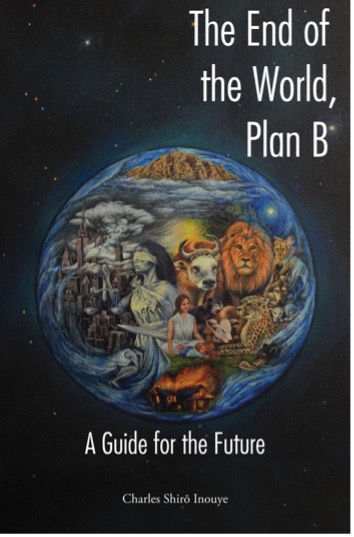
Some of us wonder if the end has come, finally, after all. The idea of the end of the world persists as a common narrative in many spiritual traditions, including Buddhism, Christianity, Judaism, and Islam. What many people don’t realize is that the reading of this story that looms so ominously today is actually a misreading of the narrative as it was originally taught.
For most, the term “apocalypse” has come to mean “total destruction” rather than “the glorious revealing of all things.” This is the result of reading only the first half of the end-of-the-world narrative. Here the focus is on justice, and on the way that blessings should come to the good and punishments should fall upon the bad. This incomplete Plan A reading makes sense in a moralistic, logical way. But it also leads to sorrow and disappointment.
Many of us want justice. We demand it. We consider it an ideal. We fight for it. But a world where everyone gets what they deserve is precisely what the saviors of the world have tried to prevent. Whether Abraham, or Jesus, or Amida, or Mohammed, our spiritual teachers have placed emphasis on compassion, not on justice. The full narrative, or what I call Plan B, balances justice with compassion.
Taken alone, Plan A only makes things worse. Our fixation on justice makes it possible for us even to look forward to the end of the world, since we become convinced that we will be spared while others will be destroyed. By contrast, Plan B leads us to a life of service and sacrifice that helps us accomplish the end (or purpose) of the world: through atonement comes solidarity and peace. It discourages us from indulging in thoughts about the end (or destruction) of the world, and encourages us, rather, to think about the end (or purpose) of the world.